- 1. Key Findings
- 2. Top 10 Adventure-Friendly States in America
- 2.1. 1. Hawaii (51.4)
- 2.2. 2. Alaska (41.7)
- 2.3. 3. Rhode Island (38.3)
- 2.4. 4. Vermont (36.8)
- 2.5. 5. California (33.8)
- 2.6. 6. New Hampshire (30.8)
- 2.7. 7. Colorado (29.2)
- 2.8. 8. Connecticut (29.1)
- 2.9. 9. Oregon (28.5)
- 2.10. 10. Wyoming (28.1)
- 3. What This Means for Outdoor Travel
- 4. Conclusion
- 5. Methodology
- 5.1. Why these weights?
- 5.2. Data Sources & Reproducibility

The Most Adventure-Friendly States in America
7 min read
Table of Contents [Show]
For years, outdoor culture in the U.S. has revolved around one assumption: if you want the best access to nature, you go to Colorado. Big mountains. Endless public land. Iconic hikes. Intuitively, it made sense.
But we’ve been confusing scenery with actual usability.
A new analysis of outdoor accessibility across all 50 states delivers a clear revelation: Colorado only ranks as the 7th most adventure-friendly state. Six other states, including tiny Rhode Island, offer better everyday access to real adventure when measured by what actually matters: how many trails you can reach, how much public land you share with fellow residents, how many months a year the weather cooperates, and how strongly the local economy supports the outdoors.
The tool behind this revelation is the Adventure Access Index, a fresh metric built from four authoritative government datasets that strips away scenic reputation and personal bias and focuses on genuine outdoor opportunity.
Let’s dive into what the data shows.
Key Findings
- Colorado at 7th place – The state long considered America’s outdoor haven ranks surprisingly low when real accessibility is taken into account.
- Rhode Island storms into 3rd – The nation’s smallest state, with zero federal public lands, outperforms Colorado thanks to extraordinary trail density.
- Hawaii claims #1 – Year-round hiking weather proves far more valuable than vast seasonal wilderness.
- Climate often beats raw acreage – States with long usable seasons dominate the upper ranks.
- New England’s dominance – Four of the top 10 are small Northeastern states that deliver dense, accessible trail networks.
- Mountain West underperforms – Iconic Western states average only around 15th place, limited by short seasons and sprawling distances between trails.
Top 10 Adventure-Friendly States in America

1. Hawaii (51.4)
Hawaii takes the crown with a near-perfect score driven by its 12-month hiking season and a robust 6.1% recreation economy. In a state where trails are rarely closed by weather, residents and visitors enjoy dramatically more annual outdoor opportunities than anywhere else in the country.
2. Alaska (41.7)
Alaska’s massive public lands deliver an astonishing 207,000 acres per capita, but a brutally short four-month hiking season holds it back from the top spot. When the weather cooperates, though, few places on Earth can match its scale.
3. Rhode Island (38.3)
The biggest surprise of the index: tiny Rhode Island ranks third despite having no federal public lands at all. Its secret? An unmatched trail density of 406 miles per 1,000 square miles (more than four times Colorado’s) proving that smart local infrastructure can create exceptional outdoor opportunities.
4. Vermont (36.8)
Vermont earns its place as New England’s trail density champion. With networks of well-maintained paths winding through the Green Mountains, the state delivers reliable, high-quality access that punches well above its size.
5. California (33.8)
California combines nearly 11 months of favorable hiking weather with over 18,500 trail miles. From coastal bluffs to Sierra peaks, the Golden State offers an enormous variety of experiences across an extended season.
6. New Hampshire (30.8)
Often overshadowed by its neighbors, New Hampshire delivers consistently strong performance across every metric. Its White Mountains and dense trail systems make it a quiet powerhouse for everyday outdoor adventure.
7. Colorado (29.2)
Even with its legendary 14ers, aspen groves, and outdoor culture, Colorado lands in seventh place. Excellent public land per capita and solid trail density are offset by a shorter seven-month season and greater distances between access points.
8. Connecticut (29.1)
Another small-state standout, Connecticut cracks the top 10 with impressive trail density and a respectable six-month season. It shows once again that compact, well-connected trail networks can rival much larger Western states.
9. Oregon (28.5)
Oregon brings Pacific Northwest muscle to the ranking, blending strong trail density, solid public lands, and an eight-month season. From the coast to the Cascades, it remains a favorite for serious outdoor enthusiasts.
10. Wyoming (28.1)
Wyoming offers “big sky, big access” with vast public lands, but a short five-month season and lower trail density keep it from climbing higher. When trails are open, however, the state’s wild landscapes are hard to beat.
| Rank | State | AAI Score | Trail Density | Public Acres/Capita | Hiking Months | Rec Economy % |
|---|---|---|---|---|---|---|
| 1 | Hawaii | 51.4 | 90.3 | 86.4 | 12 | 6.1 |
| 2 | Alaska | 41.7 | 5.6 | 207,466 | 4 | 5.3 |
| 3 | Rhode Island | 38.3 | 406.2 | 0.0 | 6 | 1.8 |
| 4 | Vermont | 36.8 | 282.1 | 771.1 | 5 | 4.4 |
| 5 | California | 33.8 | 118.8 | 1,317.8 | 11 | 2.1 |
| 6 | New Hampshire | 30.8 | 245.7 | 685.9 | 5 | 3.6 |
| 7 | Colorado | 29.2 | 123.5 | 4,508.4 | 7 | 3.8 |
| 8 | Connecticut | 29.1 | 299.5 | 0.0 | 6 | 1.5 |
| 9 | Oregon | 28.5 | 89.6 | 7,973.1 | 8 | 3.4 |
| 10 | Wyoming | 28.1 | 70.0 | 53,387.0 | 5 | 4.6 |
What This Means for Outdoor Travel
In a year of record-breaking crowds at America’s national parks, the Adventure Access Index offers something increasingly valuable: a smarter way to find uncrowded trails, maximize your time outdoors, and plan trips that actually deliver more hiking, less driving, and a more enjoyable travel experience.
For travelers, this changes how trips should be planned:
- Think smarter vacations — Instead of defaulting to the same crowded national parks, use the index to target high-density states for vacations. A weekend in Rhode Island can deliver more usable trails per day than a week in parts of the Mountain West, simply because you’re never more than a short drive from the next great hike. Pack the car, book a cabin, and experience what true trail density feels like.
- Time your trips — Season length is one of the index’s most powerful insights for travelers. Hawaii and California dominate for winter and shoulder-season escapes when many Rocky Mountain trails are closed by snow or scorched by extreme heat. Longer usable seasons mean more actual days on the trail and fewer wasted trips.
- Discover hidden gems — Don’t overlook mid-tier states like North Carolina (#18) or Tennessee (#21). The Smoky Mountains offer world-class hiking, the Outer Banks deliver coastal adventures, and you’ll often find far fewer crowds than in Colorado or California. These states may not top the overall index, but certain regions within them punch at an elite level.
- Advocate locally — States like Illinois (#49), Ohio (#43), and Missouri (#41) have millions of residents who love the outdoors but very few places to enjoy it close to home. Start or join a trail advocacy group, attend city council meetings, or support ballot measures for green infrastructure. Rhode Island’s success shows that determined local investment can dramatically change a state’s ranking even without federal wilderness.
The rankings also highlight broader lessons: improving outdoor access is less about acquiring more land and more about smarter use of what already exists. States and federal agencies that focus on trail density, season extension, and per-capita access will create better experiences for everyone, including travelers.
Conclusion
The Adventure Access Index shifts the question from “Which state looks the most impressive?” to “Where can I actually get outside more often and more easily?” It reminds us that great outdoor lives aren’t reserved for people lucky enough to live near snow-topped peaks.
And just like any index, it has limitations: trail miles are compiled estimates, climate figures use long-term averages rather than current conditions, trail quality and difficulty aren’t factored in, and some states start at a disadvantage with zero federal lands. Still, it offers one of the most balanced pictures yet of genuine outdoor accessibility across America.
For outdoor travelers, that may be the most useful revelation of all.
| Rank | State | AAI Score | Trail Density | Public Acres Per Capita | Hiking Months | Recreation GDP % | Population | Land Area Sq Mi |
|---|---|---|---|---|---|---|---|---|
| 1 | Hawaii | 51.35 | 90.3 | 86.4 | 12 | 6.1 | 1435138 | 6423 |
| 2 | Alaska | 41.67 | 5.61 | 207466.44 | 4 | 5.3 | 733406 | 570641 |
| 3 | Rhode Island | 38.33 | 406.19 | 0 | 6 | 1.8 | 1095962 | 1034 |
| 4 | Vermont | 36.84 | 282.09 | 771.06 | 5 | 4.4 | 647464 | 9217 |
| 5 | California | 33.84 | 118.76 | 1317.76 | 11 | 2.1 | 38965193 | 155779 |
| 6 | New Hampshire | 30.77 | 245.73 | 685.92 | 5 | 3.6 | 1402054 | 8953 |
| 7 | Colorado | 29.16 | 123.5 | 4508.36 | 7 | 3.8 | 5877610 | 103642 |
| 8 | Connecticut | 29.09 | 299.46 | 0 | 6 | 1.5 | 3617176 | 4842 |
| 9 | Oregon | 28.5 | 89.59 | 7973.13 | 8 | 3.4 | 4233358 | 95988 |
| 10 | Wyoming | 28.13 | 70.04 | 53387.02 | 5 | 4.6 | 584057 | 97093 |
| 11 | New Jersey | 27.79 | 251.56 | 1.26 | 7 | 1.3 | 9290841 | 7354 |
| 12 | Utah | 26.82 | 90.06 | 9304.14 | 7 | 3.7 | 3417734 | 82170 |
| 13 | Idaho | 26.71 | 87.12 | 18830.24 | 6 | 4.2 | 1964726 | 82643 |
| 14 | Montana | 25.69 | 65.27 | 25686.65 | 5 | 4.9 | 1122867 | 145546 |
| 15 | Massachusetts | 24.84 | 237.18 | 0 | 6 | 1.6 | 6981974 | 7800 |
| 16 | Arizona | 24.64 | 47.54 | 3769.45 | 9 | 2.6 | 7431344 | 113594 |
| 17 | Washington | 24.62 | 133.92 | 1817.44 | 7 | 2.6 | 7812880 | 66456 |
| 18 | North Carolina | 24.58 | 111.07 | 121.15 | 8 | 2.3 | 10835491 | 48618 |
| 19 | Nevada | 24.11 | 34.61 | 17845.6 | 9 | 2.3 | 3194176 | 109781 |
| 20 | New Mexico | 22.92 | 37.1 | 11557.97 | 8 | 2.9 | 2114371 | 121298 |
| 21 | Tennessee | 22.38 | 87.3 | 107.37 | 8 | 2.2 | 7126489 | 41235 |
| 22 | West Virginia | 22.14 | 91.52 | 638.93 | 7 | 2.8 | 1770071 | 24038 |
| 23 | Delaware | 22.02 | 174.45 | 0 | 7 | 1.3 | 1031890 | 1949 |
| 24 | South Carolina | 21.91 | 69.86 | 131.31 | 8 | 2.4 | 5373555 | 30061 |
| 25 | Maryland | 21.72 | 164.83 | 0 | 7 | 1.4 | 6164660 | 9707 |
| 26 | Arkansas | 19.79 | 40.36 | 899.18 | 8 | 2.4 | 3067732 | 52035 |
| 27 | Georgia | 19.54 | 66.07 | 80.06 | 8 | 1.9 | 11029227 | 57513 |
| 28 | Maine | 19.37 | 77.81 | 48.37 | 5 | 3.9 | 1395722 | 30843 |
| 29 | Indiana | 19.18 | 66.99 | 31.62 | 6 | 3.3 | 6862199 | 35826 |
| 30 | Virginia | 19.03 | 106.36 | 218.52 | 7 | 1.8 | 8715698 | 39490 |
| 31 | Alabama | 18.39 | 56.27 | 136.42 | 8 | 1.8 | 5108468 | 50645 |
| 32 | Texas | 17.99 | 26.03 | 27.45 | 9 | 1.5 | 30503301 | 261232 |
| 33 | Florida | 17.96 | 78.32 | 111.59 | 6 | 2.8 | 22610726 | 53625 |
| 34 | Kentucky | 17.24 | 65.85 | 160.55 | 7 | 2.1 | 4526154 | 39486 |
| 35 | Oklahoma | 17.1 | 33.53 | 100.61 | 8 | 1.9 | 4053824 | 68595 |
| 36 | Mississippi | 16.19 | 31.97 | 410.89 | 8 | 1.7 | 2939690 | 46923 |
| 37 | Pennsylvania | 16.04 | 113.98 | 40.32 | 6 | 1.7 | 12961683 | 44743 |
| 38 | New York | 15.89 | 123.07 | 71.55 | 6 | 1.5 | 19571216 | 47126 |
| 39 | Michigan | 15.07 | 86.67 | 298.94 | 5 | 2.7 | 10037261 | 56539 |
| 40 | Missouri | 14.77 | 49.46 | 253.56 | 7 | 1.8 | 6196156 | 68742 |
| 41 | Wisconsin | 13.68 | 84.94 | 261.29 | 5 | 2.4 | 5910955 | 54158 |
| 42 | South Dakota | 13.3 | 31.66 | 2566.85 | 5 | 3.2 | 919318 | 75811 |
| 43 | Ohio | 12.95 | 78.31 | 21.56 | 6 | 1.6 | 11785935 | 40861 |
| 44 | Minnesota | 12.67 | 65.3 | 645.67 | 5 | 2.5 | 5737915 | 79627 |
| 45 | Louisiana | 12.3 | 27.78 | 133.95 | 7 | 1.6 | 4573749 | 43204 |
| 46 | Kansas | 12.28 | 22.02 | 36.73 | 7 | 1.7 | 2940546 | 81759 |
| 47 | Iowa | 11.15 | 37.6 | 0 | 6 | 1.9 | 3207004 | 55857 |
| 48 | Nebraska | 10.2 | 24.73 | 183.84 | 6 | 1.9 | 1978379 | 76824 |
| 49 | Illinois | 10.03 | 50.43 | 24.22 | 6 | 1.4 | 12549689 | 55519 |
| 50 | North Dakota | 5.66 | 20.29 | 1516.62 | 5 | 1.6 | 783926 | 69001 |
Methodology
The Adventure Access Index (AAI) was created by combining four key datasets that determine how easy it is for people to get outside and enjoy nature. The index weights its four components as follows:
- Trail Density (30% weight): Measured in trail miles per 1,000 square miles of state land. More trails mean more entry points, less crowding, and greater variety of experiences.
- Public Land Access per Capita (25% weight): Acres of BLM, USFS, and designated wilderness land per 1,000 residents. This metric reveals whether vast public holdings actually serve the people living nearby.
- Hiking Season Quality (25% weight): Number of months with comfortable temperatures (40–80°F) and manageable precipitation (under 4 inches), based on 30-year NOAA climate normals. A state with 8–12 usable months offers far more annual opportunity than one limited to 4–5.
- Recreation Economy Vitality (20% weight): Outdoor recreation’s share of state GDP, drawn from Bureau of Economic Analysis data. A stronger recreation economy signals better trail maintenance, infrastructure, and support services.
Each component is normalized to a 0–100 scale, then combined using the weights above to produce a final score out of 100. Higher scores indicate better overall adventure access for residents and visitors.
Why these weights?
Trail density gets the highest emphasis because you can’t hike without trails. Season length and per-capita land access are given equal importance as a year-round short trail often provides more real opportunity than a long seasonal one. The recreation economy, while weighted lowest, reflects investment in quality and upkeep.
Data Sources & Reproducibility
The data comes from federal and state sources (USGS, BLM, NOAA, Census Bureau, and Bureau of Economic Analysis), covers all 50 states with recent figures (mostly 2023–2024), and is fully transparent and reproducible:
- US Census Bureau - Population and land area (2023)
- National Wilderness Preservation System - Wilderness acreage by state
- BLM Public Land Statistics 2024 - Federal lands by state
- USGS National Transportation Dataset - Trail miles
- NOAA Climate Normals (1991-2020) - 30-year temperature and precipitation averages
- BEA Outdoor Recreation Statistics 2024 - State-by-state economic data
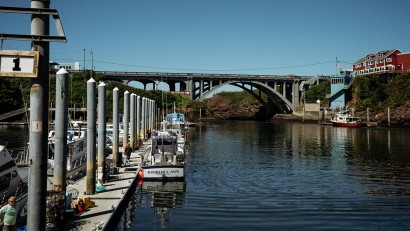
Featured image by Holly Mandarich.